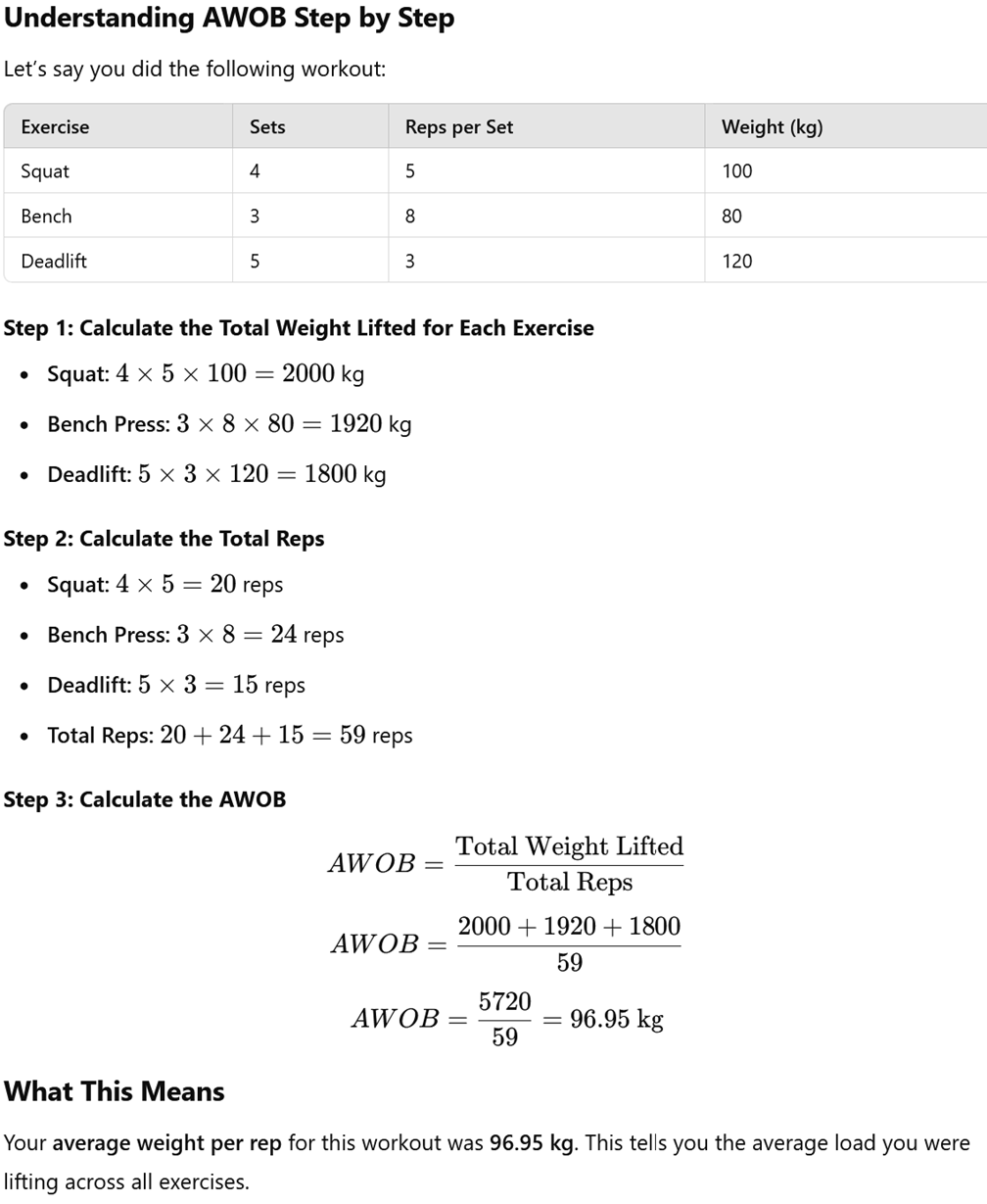
The Average Weight on the Bar (AWOB) is a useful metric in strength training, particularly in powerlifting and weightlifting. It represents the average weight lifted per rep in a training session or over a period of time.
What This Means
Your average weight per rep for this workout was 96.95 kg. This tells you the average load you were lifting across all exercises.
Why It’s Useful
- If your AWOB increases over time, it means your training intensity is going up.
- If AWOB is too high, it could mean you’re lifting too heavy and not getting enough volume.
- If AWOB is too low, you might not be challenging yourself enough.
Do you want help applying this to your own training?
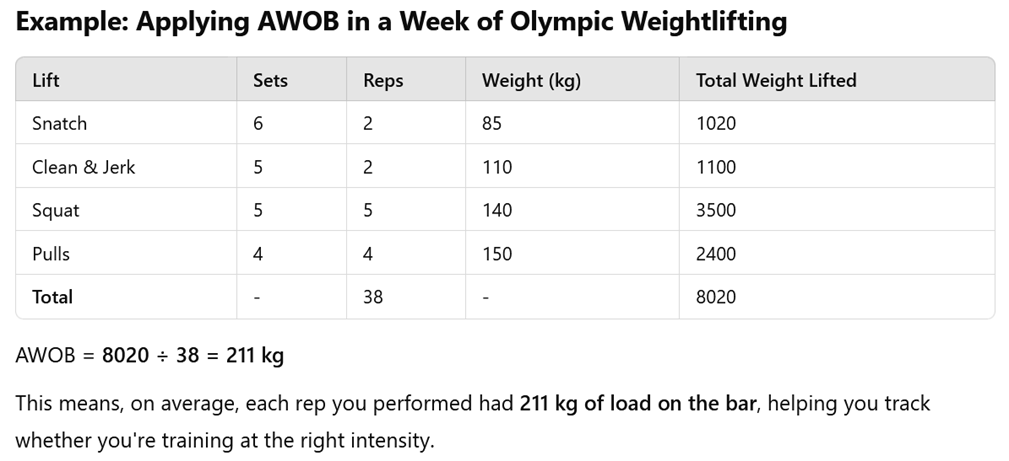
Using Average Weight on the Bar (AWOB) in the long term for Olympic weightlifting can help you track progress, optimize training phases, and prevent overtraining. Here's how you can apply it over months or years:
1. Tracking Progress Over Training Cycles
- By logging AWOB weekly or monthly, you can see if your training intensity is increasing over time.
- Example: If your AWOB for snatch was 80 kg six months ago and now it's 85 kg, you’ve increased your working weights, which suggests improvement.
2. Periodization and Peaking
AWOB helps balance training across different phases:
- Base/Volume Phase: AWOB is usually lower (more reps, lighter weights).
- Strength Phase: AWOB gradually increases (heavier squats, pulls, and lifts).
- Peaking Phase: AWOB is highest (fewer reps, heavier snatch/C&J).
- Deload Weeks: AWOB drops to allow recovery before competition.
By tracking AWOB, you can see if you’re progressing too fast or too slow within a cycle.
3. Avoiding Overtraining and Injury
- If AWOB jumps too quickly, you might be pushing too hard, increasing injury risk.
- If AWOB stalls or decreases when it shouldn’t, it could indicate fatigue or need for a deload.
- Example: If your AWOB jumps from 200 kg to 230 kg in one month, but your lifts feel slow, you may be accumulating too much fatigue.
4. Identifying Strength vs. Technique Weaknesses
- If squat & pull AWOB increases, but snatch AWOB stays low, you might need more technical work.
- If snatch AWOB increases, but clean & jerk AWOB lags, your leg strength might need attention.
- Tracking AWOB by exercise type (strength vs. technical lifts) helps you adjust training focus.
5. Comparing Different Training Methods
If you change programs or coaching styles, AWOB can help you evaluate what works best:
- High-frequency training vs. lower frequency
- More squatting vs. more pulls
- Volume-based vs. intensity-based programs
How to Use AWOB in the Long Term
- Record AWOB weekly or monthly for different lifts.
- Compare AWOB trends over months (is it increasing, stable, or decreasing?).
- Adjust training based on AWOB insights (do you need more volume, intensity, or recovery?).
- Use AWOB to plan your training cycles (gradually increase intensity, peak at the right time).
Was this article helpful?
That’s Great!
Thank you for your feedback
Sorry! We couldn't be helpful
Thank you for your feedback
Feedback sent
We appreciate your effort and will try to fix the article